
Simplified Strategies & Support For
female entrepreneurs
~ Create, Grow & Thrive with Confidence ~
Hey there! You might find some affiliate links in this blog. If you decide to make a purchase through one, I may earn a small commission. It helps keep this space running, and I only share things I personally find valuable. Thanks for being here!
Blog Posts
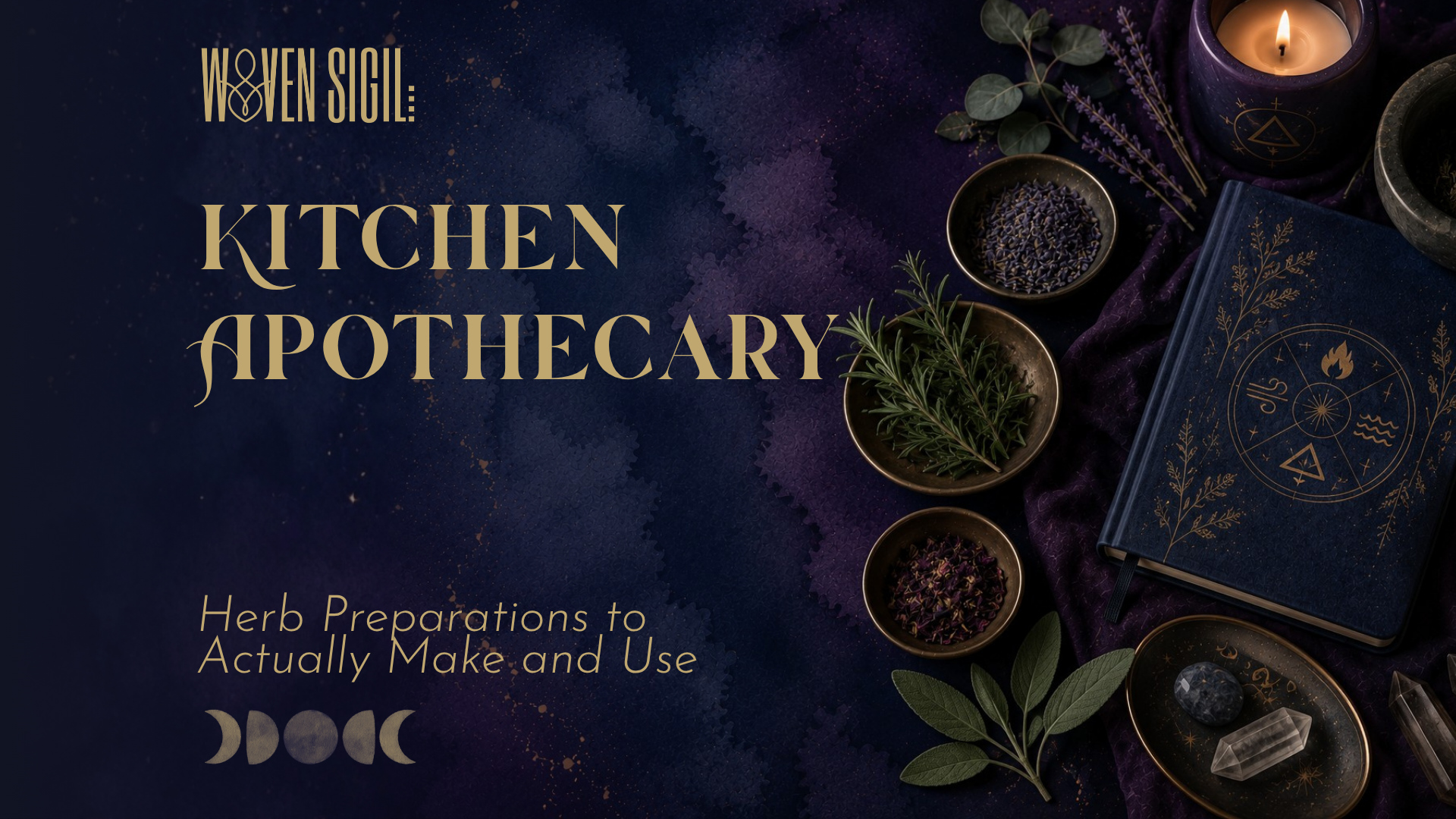
Build an Autumn Kitchen Apothecary
Four Practical Herb Preparations for Protection, Prosperity, and Seasonal Magic
Most herb content stops at the list. Rosemary for protection. Cinnamon for abundance. Clove for banishing. Useful to know, but it doesn't tell you what to do on a Sunday afternoon when your kitchen smells like woodsmoke and you want to actually do something with the herbs sitting in your cabinet.
This is a guide to the doing part — the hands-on, autumn-specific preparations that turn a kitchen counter into a working apothecary. No special equipment required. No previous experience necessary. Just herbs, intention, and a little patience.
What a Kitchen Apothecary Actually Is
A kitchen apothecary is not an aesthetic. It's a working collection of herb preparations you actually use — infused oils, herb bundles, blended powders, spell jars, seasonal teas. The kitchen is the natural home for this kind of work because the tools are already there: a small pot, a jar, a strainer, heat. Nothing precious about it.
Autumn is a particularly good time to build or refresh yours. The season naturally turns toward preservation — putting things up, storing, preparing for winter. Working with autumn herbs fits that rhythm in a very practical way.
Historically, this is not a new idea. Women have always been the keepers of household herb knowledge. What to dry and hang from the rafters before first frost. Which blend soothed a cough. What to burn to clear the air after illness. What to put at the threshold when something felt wrong. The kitchen witch tradition is a direct continuation of that lineage, whether or not it ever went by that name.
Autumn Herbs Worth Working With
Before getting into preparations, a few herbs that do useful work this time of year. These aren't the only options, but they're widely available, well-documented in folk practice, and genuinely useful.
Rosemary — Protection, memory, clarity. Grows through frost in most climates and stays available into late autumn. Sharp, resinous scent that cuts through muddiness. One of the most versatile protective herbs in folk tradition.
Cinnamon — Warmth, prosperity, activation. This is a kitchen staple that crosses into magical work without much effort. It moves energy, generates warmth, and has been used in folk magic across many traditions. Ground or stick, both are useful.
Clove — Protection, banishing, strength. Strong and specific. Use it sparingly — clove is potent and can overpower blends quickly. A few whole cloves go a long way.
Bay leaf — Wishes, clarity, blessing, victory. Bay is one of the most underestimated herbs in the kitchen apothecary’s cabinet. Writing on a bay leaf and burning it is one of the oldest household ritual practices across Mediterranean and folk American traditions.
Mugwort — Dreams, intuition, the thinning veil. Especially relevant in the lead-up to Samhain when the veil between worlds is considered thinnest. Mugwort supports dream work, ancestor connection, and heightened intuition. It has a bitter, complex scent. Note: avoid if pregnant or trying to conceive.
Sage — Purification, wisdom, clearing. Common culinary sage (Salvia officinalis) works well for general clearing work and is a sustainable, widely grown option. If you're thinking about white sage specifically, it's worth reading about ethical sourcing practices first.
Nutmeg — Luck, clarity, prosperity. Another spice cabinet herb that carries real folkloric weight. Grated fresh nutmeg has a different quality than the pre-ground powder — worth noting if you have access to whole nutmeg.
Black pepper — Protection, banishing, breaking crossed conditions. An old folk magic staple that most people have on hand. Whole peppercorns are more useful than ground for most applications.
As always, use your own discernment and consult a qualified practitioner for anything related to your physical health.
Four Preparations You Can Actually Make
1. Infused Oil
An infused oil extracts the properties of an herb into a carrier oil over time. The result can be used to dress candles, anoint objects or yourself, add to spell jars, or keep on your altar for regular use.
What you need: Dried herbs — not fresh, because fresh herbs contain water and can introduce mold into your oil. A carrier oil: olive oil is traditional and widely used in folk practice; jojoba and sweet almond oil are good alternatives with longer shelf lives. A clean glass jar with a tight lid. Time.
How to make it:
Fill your jar loosely with dried herbs. Don't pack them so tightly there's no room for oil.
Pour your carrier oil over the herbs until completely submerged. Leave about an inch of headspace at the top.
Seal the jar and give it a good shake.
Place it somewhere out of direct sunlight — a cabinet shelf works fine.
Let it infuse for 4–6 weeks, giving it a shake every few days when you remember.
When ready, strain through cheesecloth or a fine-mesh strainer into a clean, labeled bottle. Include the herb name and date.
For autumn, consider: rosemary in olive oil for protection work; cinnamon sticks in a neutral oil for warmth and prosperity; clove for a strong warding oil. Keep your jars simple — one or two herbs per jar — so you have more control when layering and blending later.
If you want a faster result, a gentle warm infusion works: combine herbs and oil in a small saucepan over the lowest heat setting you have, for 2–3 hours. Keep the temperature low enough that the oil never simmers. Strain and bottle while still warm. The shelf life will be shorter than a slow cold infusion, but it's ready same day.
2. Herb Powder Blend
Blended herb powders are among the most flexible tools in a kitchen apothecary. Sprinkle them across thresholds, add them to candles, mix into spell jars, burn a small amount on a charcoal disc, or add to a fire if you have one.
What you need: Dried herbs, either already powdered or whole for grinding. A mortar and pestle is traditional — the slow process of grinding by hand is itself a form of intentional work, which is one reason mortars appear in folk magic traditions across cultures. A dedicated spice grinder also works if you want it faster. A small clean jar for storage.
How to make it: Grind your herbs separately to a fairly fine consistency, then combine. Smell as you go — the blend should smell intentional. Adjust before adding more.
An autumn protection blend:
2 parts dried rosemary
1 part ground clove
1 part cinnamon
1 part black pepper
Grind together until the texture is reasonably consistent. Store in a labeled jar. Sprinkle a thin line across doorways, windowsills, or the four corners of a room you want to ward. You can also add a spoonful to a spell jar, dress a candle by rolling it lightly in the blend, or burn a small pinch on a charcoal disc.
3. Seasonal Spell Jar
A spell jar is a small sealed container — a jar, a bottle, a corked vial — filled with a combination of herbs and other materials that work together toward a specific purpose. They're kept somewhere meaningful, carried, or buried.
The key to a useful spell jar is deciding what it's actually for before you start gathering materials. "Protection" and "protection for my home from unwanted energy coming through the front door" are different jars. The more specific the purpose, the more useful the jar.
An autumn home-warding jar:
Layer into a small jar in this order:
Salt as a base layer — purification and protection, traditional
Dried rosemary
A whole clove or two
A small piece of black tourmaline if you have one (optional but useful)
A few whole black peppercorns
A bay leaf with your intention written on it in pencil
Seal the jar by dripping wax from a lit black or white candle over the lid until it's fully covered. Set it down. Hold it in both hands for a moment, and if it feels right, state the purpose aloud — not a memorized phrase, just the actual thing you're asking for. Place it near your front door: inside a cabinet, on a shelf nearby, tucked behind furniture. It doesn't need to be visible.
Spell jars are generally considered to remain active as long as they're sealed and undisturbed. If the jar breaks or you want to close out the working, bury the contents in the ground outside your property.
4. Ritual Herb Bundle
An herb bundle can serve several purposes: burned slowly for smoke clearing, hung above a doorway as a protective ward, kept on an altar, or added to a fire. Autumn herbs tied with natural twine are practical and seasonally appropriate.
Simple autumn bundle:
Rosemary sprigs — fresh or recently dried
One or two cinnamon sticks
A few sprigs of dried sage
Bay leaves tucked between the layers
Arrange them together with stems aligned at one end. Wrap tightly with natural cotton or hemp twine, starting at the stem end and working upward, then back down and tying off. If you're using fresh herbs, hang upside down to dry for at least one to two weeks before burning — fresh herbs smolder and produce thick smoke rather than the clean slow burn you're looking for.
Once dry, you can light the tip and let it smolder over a fireproof dish for brief smoke clearing, hang the bundle near a doorway or window, lay it across your altar, or set it in the fireplace before lighting a fire. The scent of burning rosemary and sage is unmistakably autumnal, and there's something grounding about it that doesn't need a lot of explanation.
Using What You Make
Making the preparations is only half the work. The other half is actually reaching for them.
A rosemary protection oil doesn't do anything sitting in a cabinet for eight months. It does something when you use it to anoint your front door on the new moon, or add a few drops to a candle you burn when the energy in your house feels heavy, or blend it into a warding spell jar at the start of autumn.
Build the habit of use alongside the habit of making. When you finish an infused oil, make a small note somewhere about what you used it for and whether it felt right. Your own records, however simple, are more valuable than anyone else's correspondence list. Over time, you'll know what you actually reach for and why, which is the whole point of keeping a working apothecary rather than a decorative one.
Starting Where You Are
You don't need all of this at once. One infused oil started this weekend — rosemary in olive oil, lid on, put in a cabinet — is a real beginning. From there the collection grows naturally, shaped by what you make, what you use, and what you find yourself running out of.
Autumn is generous with materials. Most of what's listed here comes from a grocery store or is already in your kitchen. The kitchen witch tradition was built on exactly that kind of accessibility. What's on hand. What's in season. What works.
And if ritual scent work interests you, this guide on building a ritual scent practice covers herb oils and personal blending with more depth.

Build an Autumn Kitchen Apothecary
Four Practical Herb Preparations for Protection, Prosperity, and Seasonal Magic
Most herb content stops at the list. Rosemary for protection. Cinnamon for abundance. Clove for banishing. Useful to know, but it doesn't tell you what to do on a Sunday afternoon when your kitchen smells like woodsmoke and you want to actually do something with the herbs sitting in your cabinet.
This is a guide to the doing part — the hands-on, autumn-specific preparations that turn a kitchen counter into a working apothecary. No special equipment required. No previous experience necessary. Just herbs, intention, and a little patience.
What a Kitchen Apothecary Actually Is
A kitchen apothecary is not an aesthetic. It's a working collection of herb preparations you actually use — infused oils, herb bundles, blended powders, spell jars, seasonal teas. The kitchen is the natural home for this kind of work because the tools are already there: a small pot, a jar, a strainer, heat. Nothing precious about it.
Autumn is a particularly good time to build or refresh yours. The season naturally turns toward preservation — putting things up, storing, preparing for winter. Working with autumn herbs fits that rhythm in a very practical way.
Historically, this is not a new idea. Women have always been the keepers of household herb knowledge. What to dry and hang from the rafters before first frost. Which blend soothed a cough. What to burn to clear the air after illness. What to put at the threshold when something felt wrong. The kitchen witch tradition is a direct continuation of that lineage, whether or not it ever went by that name.
Autumn Herbs Worth Working With
Before getting into preparations, a few herbs that do useful work this time of year. These aren't the only options, but they're widely available, well-documented in folk practice, and genuinely useful.
Rosemary — Protection, memory, clarity. Grows through frost in most climates and stays available into late autumn. Sharp, resinous scent that cuts through muddiness. One of the most versatile protective herbs in folk tradition.
Cinnamon — Warmth, prosperity, activation. This is a kitchen staple that crosses into magical work without much effort. It moves energy, generates warmth, and has been used in folk magic across many traditions. Ground or stick, both are useful.
Clove — Protection, banishing, strength. Strong and specific. Use it sparingly — clove is potent and can overpower blends quickly. A few whole cloves go a long way.
Bay leaf — Wishes, clarity, blessing, victory. Bay is one of the most underestimated herbs in the kitchen apothecary’s cabinet. Writing on a bay leaf and burning it is one of the oldest household ritual practices across Mediterranean and folk American traditions.
Mugwort — Dreams, intuition, the thinning veil. Especially relevant in the lead-up to Samhain when the veil between worlds is considered thinnest. Mugwort supports dream work, ancestor connection, and heightened intuition. It has a bitter, complex scent. Note: avoid if pregnant or trying to conceive.
Sage — Purification, wisdom, clearing. Common culinary sage (Salvia officinalis) works well for general clearing work and is a sustainable, widely grown option. If you're thinking about white sage specifically, it's worth reading about ethical sourcing practices first.
Nutmeg — Luck, clarity, prosperity. Another spice cabinet herb that carries real folkloric weight. Grated fresh nutmeg has a different quality than the pre-ground powder — worth noting if you have access to whole nutmeg.
Black pepper — Protection, banishing, breaking crossed conditions. An old folk magic staple that most people have on hand. Whole peppercorns are more useful than ground for most applications.
As always, use your own discernment and consult a qualified practitioner for anything related to your physical health.
Four Preparations You Can Actually Make
1. Infused Oil
An infused oil extracts the properties of an herb into a carrier oil over time. The result can be used to dress candles, anoint objects or yourself, add to spell jars, or keep on your altar for regular use.
What you need: Dried herbs — not fresh, because fresh herbs contain water and can introduce mold into your oil. A carrier oil: olive oil is traditional and widely used in folk practice; jojoba and sweet almond oil are good alternatives with longer shelf lives. A clean glass jar with a tight lid. Time.
How to make it:
Fill your jar loosely with dried herbs. Don't pack them so tightly there's no room for oil.
Pour your carrier oil over the herbs until completely submerged. Leave about an inch of headspace at the top.
Seal the jar and give it a good shake.
Place it somewhere out of direct sunlight — a cabinet shelf works fine.
Let it infuse for 4–6 weeks, giving it a shake every few days when you remember.
When ready, strain through cheesecloth or a fine-mesh strainer into a clean, labeled bottle. Include the herb name and date.
For autumn, consider: rosemary in olive oil for protection work; cinnamon sticks in a neutral oil for warmth and prosperity; clove for a strong warding oil. Keep your jars simple — one or two herbs per jar — so you have more control when layering and blending later.
If you want a faster result, a gentle warm infusion works: combine herbs and oil in a small saucepan over the lowest heat setting you have, for 2–3 hours. Keep the temperature low enough that the oil never simmers. Strain and bottle while still warm. The shelf life will be shorter than a slow cold infusion, but it's ready same day.
2. Herb Powder Blend
Blended herb powders are among the most flexible tools in a kitchen apothecary. Sprinkle them across thresholds, add them to candles, mix into spell jars, burn a small amount on a charcoal disc, or add to a fire if you have one.
What you need: Dried herbs, either already powdered or whole for grinding. A mortar and pestle is traditional — the slow process of grinding by hand is itself a form of intentional work, which is one reason mortars appear in folk magic traditions across cultures. A dedicated spice grinder also works if you want it faster. A small clean jar for storage.
How to make it: Grind your herbs separately to a fairly fine consistency, then combine. Smell as you go — the blend should smell intentional. Adjust before adding more.
An autumn protection blend:
2 parts dried rosemary
1 part ground clove
1 part cinnamon
1 part black pepper
Grind together until the texture is reasonably consistent. Store in a labeled jar. Sprinkle a thin line across doorways, windowsills, or the four corners of a room you want to ward. You can also add a spoonful to a spell jar, dress a candle by rolling it lightly in the blend, or burn a small pinch on a charcoal disc.
3. Seasonal Spell Jar
A spell jar is a small sealed container — a jar, a bottle, a corked vial — filled with a combination of herbs and other materials that work together toward a specific purpose. They're kept somewhere meaningful, carried, or buried.
The key to a useful spell jar is deciding what it's actually for before you start gathering materials. "Protection" and "protection for my home from unwanted energy coming through the front door" are different jars. The more specific the purpose, the more useful the jar.
An autumn home-warding jar:
Layer into a small jar in this order:
Salt as a base layer — purification and protection, traditional
Dried rosemary
A whole clove or two
A small piece of black tourmaline if you have one (optional but useful)
A few whole black peppercorns
A bay leaf with your intention written on it in pencil
Seal the jar by dripping wax from a lit black or white candle over the lid until it's fully covered. Set it down. Hold it in both hands for a moment, and if it feels right, state the purpose aloud — not a memorized phrase, just the actual thing you're asking for. Place it near your front door: inside a cabinet, on a shelf nearby, tucked behind furniture. It doesn't need to be visible.
Spell jars are generally considered to remain active as long as they're sealed and undisturbed. If the jar breaks or you want to close out the working, bury the contents in the ground outside your property.
4. Ritual Herb Bundle
An herb bundle can serve several purposes: burned slowly for smoke clearing, hung above a doorway as a protective ward, kept on an altar, or added to a fire. Autumn herbs tied with natural twine are practical and seasonally appropriate.
Simple autumn bundle:
Rosemary sprigs — fresh or recently dried
One or two cinnamon sticks
A few sprigs of dried sage
Bay leaves tucked between the layers
Arrange them together with stems aligned at one end. Wrap tightly with natural cotton or hemp twine, starting at the stem end and working upward, then back down and tying off. If you're using fresh herbs, hang upside down to dry for at least one to two weeks before burning — fresh herbs smolder and produce thick smoke rather than the clean slow burn you're looking for.
Once dry, you can light the tip and let it smolder over a fireproof dish for brief smoke clearing, hang the bundle near a doorway or window, lay it across your altar, or set it in the fireplace before lighting a fire. The scent of burning rosemary and sage is unmistakably autumnal, and there's something grounding about it that doesn't need a lot of explanation.
Using What You Make
Making the preparations is only half the work. The other half is actually reaching for them.
A rosemary protection oil doesn't do anything sitting in a cabinet for eight months. It does something when you use it to anoint your front door on the new moon, or add a few drops to a candle you burn when the energy in your house feels heavy, or blend it into a warding spell jar at the start of autumn.
Build the habit of use alongside the habit of making. When you finish an infused oil, make a small note somewhere about what you used it for and whether it felt right. Your own records, however simple, are more valuable than anyone else's correspondence list. Over time, you'll know what you actually reach for and why, which is the whole point of keeping a working apothecary rather than a decorative one.
Starting Where You Are
You don't need all of this at once. One infused oil started this weekend — rosemary in olive oil, lid on, put in a cabinet — is a real beginning. From there the collection grows naturally, shaped by what you make, what you use, and what you find yourself running out of.
Autumn is generous with materials. Most of what's listed here comes from a grocery store or is already in your kitchen. The kitchen witch tradition was built on exactly that kind of accessibility. What's on hand. What's in season. What works.
And if ritual scent work interests you, this guide on building a ritual scent practice covers herb oils and personal blending with more depth.
Follow Us!


Get your FREE Canva Mastery Kit
A quick reference guide for Canva
FREE DOWNLOAD
Canva Mastery Kit
A Canva resource guide
Effortless Design Mastery: Discover time-saving shortcuts and techniques for polished Canva design
Professional Design Insights: Unlock tips for better Canva creations
Build Design Confidence: Gain skills for effortless creation
Stay up-to-date on socials:




Empower Your Spark © 2026. All Rights Reserved.