Simplified Strategies & Support For
female entrepreneurs
~ Create, Grow & Thrive with Confidence ~
Hey there! You might find some affiliate links in this blog. If you decide to make a purchase through one, I may earn a small commission. It helps keep this space running, and I only share things I personally find valuable. Thanks for being here!
Blog Posts
Samhain Correspondences: A Quick Reference (and How to Actually Use Them)
Samhain correspondence lists are everywhere, and most of them stop at the list. Black, orange, apple, obsidian. They rarely say where a correspondence comes from or what to actually do with it. This is a quick reference with both. Items marked folk have roots in Irish, Scottish, or British custom. Items marked modern come from contemporary Pagan practice. Both are fine to use. It just helps to know which is which.
For the history and meaning of the sabbat itself, see this overview of Samhain.
At a Glance
Date: October 31 to November 1 in the Northern Hemisphere; April 30 to May 1 in the Southern Hemisphere. The astronomical cross-quarter point falls around November 6 to 8.
Season: the opening of the dark half of the year (folk). In Irish tradition, Samhain marked the end of summer grazing and the turn toward winter.
Element: Water (modern). Some traditions assign all four elements, or Earth, and the assignment varies more than most lists admit. Use water if it suits you: a bowl on the altar, or the scrying bowl you use for divination. Elemental Correspondences covers the elements in more depth.
Time of day: dusk through midnight (folk). This is the night of the festival. Begin your observance at sunset.
Colors
All of these are modern associations. There's no early source that assigns colors to Samhain.
Black: the dark half of the year. Use for candles on an ancestor altar or an altar cloth.
Burnt orange: the last of the harvest and firelight, by way of Halloween. Use for lanterns, leaves, and table decoration.
Deep purple: mourning and depth. Use for a candle lit during divination or a closing ritual.
Dark red: life, blood, and the year's end. Use for a candle you light for someone specific.
Bone white: the dead and the moon. Use for a single remembrance candle if black feels too heavy.
If you only want one, a plain white candle works for almost everything on Samhain night.
Plants and Herbs
Apple (folk): harvest, the otherworld, and divination. In Irish myth, the otherworld is often an island of apple trees. Put a whole apple on the altar, or slice one crosswise to show the five-pointed star of seeds.
Rosemary (folk): remembrance. Put a sprig by each photo on the altar.
Mugwort (folk): dreams and seeing. Keep a sachet by the bed on Samhain night. Avoid during pregnancy. Mugwort: The Dream & Intuition Herb, Explained has more.
Yew (folk): graveyards and long life. Yew is toxic if ingested. Handle for ritual purposes only; do not consume or burn, thoroughly wash hands after handling and keep away from children and pets.
Blackthorn (folk): protection, endings, and the dark of the year. Its sloes ripen after the first frosts (sloes are the dark blue-purple fruits of the blackthorn shrub), and its thorns made it a boundary hedge. Place a thorny sprig at the door or on the edge of the altar. Handle carefully.
Wormwood (modern, with older roots in protective folk magic): spirit work and banishing. Use a dried bundle as an altar decoration. Do not ingest, and avoid burning it indoors, as it contains thujone (a naturally occurring chemical compound found in the essential oils of several plants, and can be toxic at sufficiently high doses. It affects the nervous system, primarily by interfering with GABA-A receptor activity. Too much can cause agitation, muscle spasms, and seizures.)
Hazel (folk): wisdom and divination. Hazelnuts were thrown on Halloween fires in Ireland and Scotland. Use a few in the shell as an altar offering.
Rowan (folk): protection. Scottish and Irish households hung rowan over doors at Samhain and Beltane. Tie a sprig with red thread and hang it by the door.
Sage and thyme: old age and the dead. Use them in cooking for the Samhain meal.
Dried leaves and seed heads: whatever is dying back where you live. Gather a handful for the altar.
As always, use your own discernment and consult a qualified practitioner for anything related to your physical health.
Foods
Soul cakes, barmbrack, colcannon (folk): feeding the living and the dead. Samhain Kitchen Witchery: Soul Cakes, Traditional Foods, and Cooking for the Dead has recipes.
Bread and salt (folk): hospitality. Leave some on the altar overnight.
Turnips, squash, root vegetables (folk): the late harvest. Roast them for supper.
Apples and cider (folk): the orchard harvest. Serve mulled cider with supper.
Pomegranate (modern, from the Persephone myth): the underworld and return. Break one open on the altar.
Stones
All of these are modern. There's no early source tying stones to Samhain.
Obsidian: scrying and protection. Use it as a small scrying surface.
Labradorite: the threshold between seen and unseen. Hold one during divination.
Black tourmaline: protection and grounding. Set one by the door or at the edge of the altar.
Jet: mourning (it was Victorian mourning jewelry). Wear a piece or set one by a photo.
Onyx: strength through grief. Keep one in your pocket on a hard anniversary.
Bloodstone: courage and the blood of ancestry. Place one at the center of an ancestor altar.
Smoky quartz: grounding after heavy work. Hold one when you close.
Deities and Figures
No deity is required for Samhain. These are the figures people most often honor at this time of year. Only a few come from the Irish traditions where Samhain began, and the rest are modern associations drawn from other cultures.
The Morrígan (folk, Irish): war, prophecy, and sovereignty. In the early literature she meets the Dagda at Samhain.
The Dagda (folk, Irish): abundance and the cauldron that never empties.
The Cailleach (Irish and Scottish folklore, pronounced KAL-yukh): the winter hag who rules the dark half of the year.
Cernunnos (modern association, pronounced ker-NOO-nos): the antlered god of animals and the wild. He is Gaulish rather than Irish.
Hecate (modern association, Greek): crossroads, keys, and the dead.
Persephone and Hades (modern association, Greek): the underworld and the seasonal descent.
Anubis (modern association, Egyptian): the guide of souls.
Ancestors and household spirits (folk): the dead of your own family and home. For most people, these are the figures at the center of Samhain.
If you work with a deity from a culture you didn't grow up in, it's worth learning how that culture actually honors them before you put them on your altar.
Animals
All of these are modern associations, though crows and ravens do appear in Irish myth.
Crow and raven: messengers and the Morrígan, who often takes their form. Place a feather on the altar if you find one. Many places restrict collecting feathers from wild birds, so check what's legal where you live.
Owl: night and seeing in the dark. Use an image or figurine.
Black cat: Halloween and the witch's companion. Include a photo of your own cat if you have one.
Symbols and Objects
Skulls and bones (modern, as memento mori): a reminder that death comes to everyone, not a threat. Use a small skull figure on the altar.
Lanterns (folk): carved turnips in Ireland and Scotland, pumpkins in North America. Carve one and light it at dusk.
Mirrors (folk and modern): scrying and the otherworld. Use a black mirror for divination.
Keys (modern, via Hecate): thresholds and opening. Set an old key on the altar.
The Death card (modern): endings and transformation, not literal death. Place it face up on the altar or use it as a focus for a year-end reading.
Times and Places
Thresholds (folk): doorways, gates, crossroads. Stand in one to mark the turn. "The Veil Is Thin": Where the Samhain Idea Comes From and What It Means in Practice explains why.
Graves and burial grounds (folk): visiting and tending them. Take autumn flowers or a candle to a family grave.
The hearth (folk): the fire was kept burning for the dead. Light a candle in the kitchen.
Practices
Ancestor altar (modern form of folk practice): photos, belongings, candles, and food for the dead. The Samhain overview walks through building one, and Connecting with Your Ancestors Without a Tradition to Follow helps if you don't know your family line.
Dumb supper (modern name, folk roots): a silent meal with a place set for the dead.
Divination (folk): asking about the year ahead. Samhain Divination Beyond Tarot (and Apples): 11 Methods to Try covers the methods.
Bonfire (folk): Samhain fires were lit across Ireland and Scotland. Light one where it's safe and allowed, or a single candle where it isn't.
Offerings for the dead (folk): food, drink, or something they loved, left out overnight.
Storytelling (folk): telling stories about the people who have died. Tell one at supper.
Carving turnips or pumpkins (folk): lanterns to light the way. Carve one with someone else.
Saying names (folk and modern): the simplest Samhain practice there is.
Releasing what's ending (modern): writing down what you're done with and burning it.Samhain as the Witch's New Year: A Closing-the-Year Review, Step by Step has a full method.
You don't need everything on this page. One color, one plant, and one practice that means something to you will do more than a crowded altar.
Follow Us!


Get your FREE Canva Mastery Kit
A quick reference guide for Canva
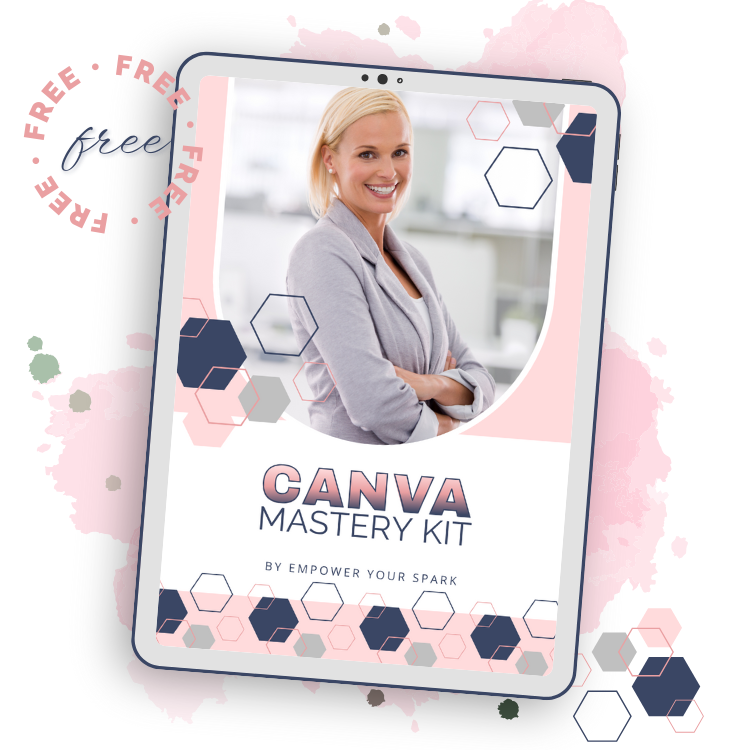
FREE DOWNLOAD
Canva Mastery Kit
A Canva resource guide
Effortless Design Mastery: Discover time-saving shortcuts and techniques for polished Canva design
Professional Design Insights: Unlock tips for better Canva creations
Build Design Confidence: Gain skills for effortless creation
Stay up-to-date on socials:




Empower Your Spark © 2026. All Rights Reserved.