
Simplified Strategies & Support For
female entrepreneurs
~ Create, Grow & Thrive with Confidence ~
Hey there! You might find some affiliate links in this blog. If you decide to make a purchase through one, I may earn a small commission. It helps keep this space running, and I only share things I personally find valuable. Thanks for being here!
Blog Posts
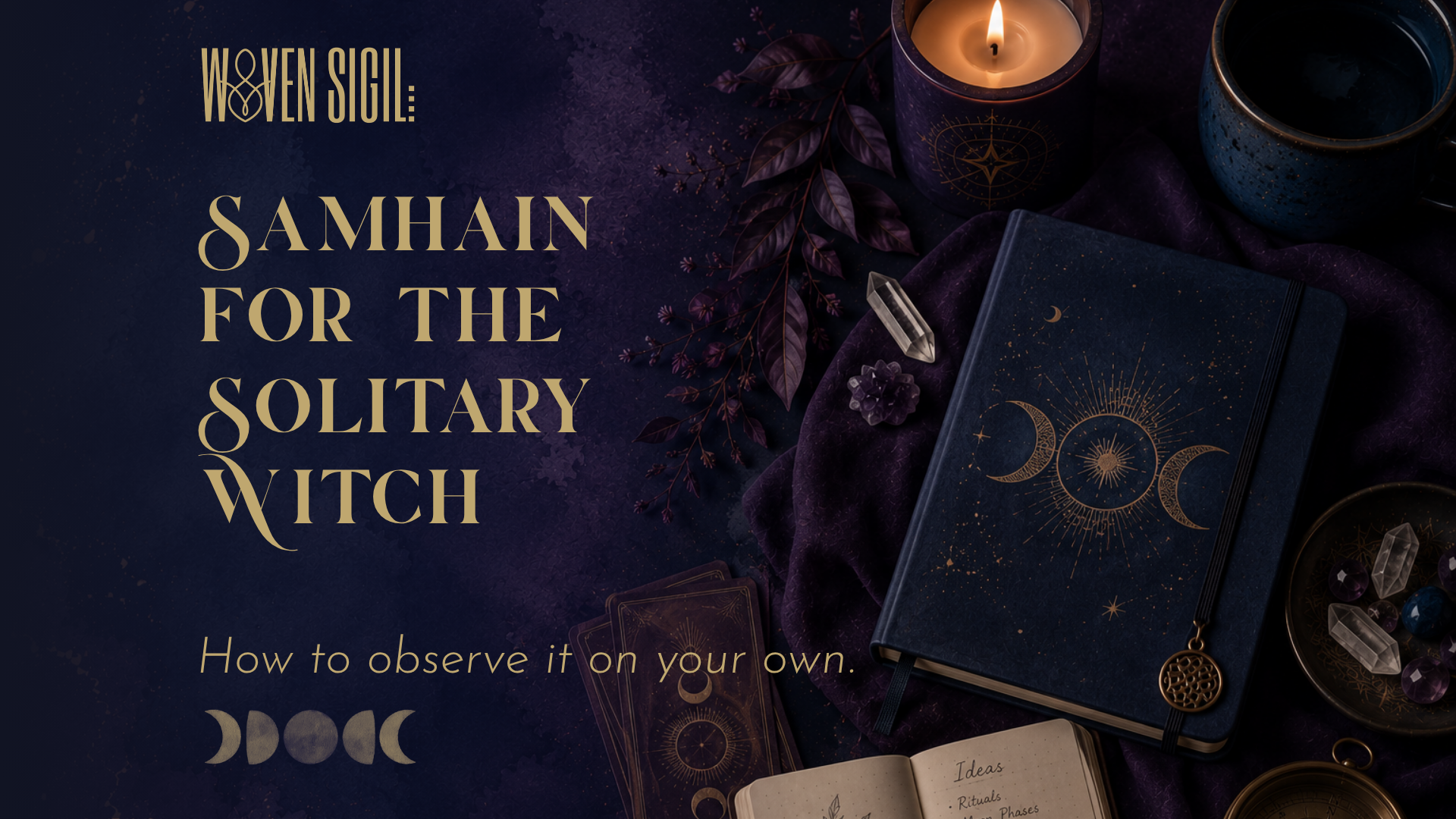
How to Celebrate Samhain as a Solitary Practitioner
Samhain is the sabbat most people have heard of, even if they don't call it by that name. Halloween shares the date, and beneath all the commercial overlay, the older significance is still legible: this is the time of year when something shifts. The darkness deepens. The year turns toward its end. The line between the living and the dead feels thinner.
In coven-based practice, Samhain is often observed communally — formal rituals, group workings, shared altar space, the kind of collective container that makes the weight of the sabbat feel held. If you're practicing alone, none of that is available to you. And for a sabbat this significant, that can feel like a real gap.
This guide is for solitary practitioners: how to observe Samhain meaningfully without a group, without prescribed ritual forms, and without feeling like you're doing a lesser version of something that's supposed to be communal.
What Samhain Is Actually About
If you want a full grounding in Samhain's history, meanings, and traditions, this overview covers it in depth. The short version: Samhain (October 31–November 1, or the astronomical cross-quarter point which falls a few days later) marks the final harvest and the beginning of winter's half of the year in the modern pagan-based Wheel of the Year. It's the night when the veil between the world of the living and the world of the dead is traditionally thinnest.
The themes are death, ancestry, endings, and the kind of darkness that isn't threatening but revelatory — the dark that lets you see what was hidden. This is a sabbat for honoring the dead, attending to what needs to end, and crossing into the next cycle of the year with intention.
Why Solitary Samhain Practice Is Different, Not Diminished
Coven Samhain rituals have specific advantages: shared energy, witnesses, experienced leadership, the weight of group intention. What it doesn't have is the intimacy and personal specificity that solitary practice allows.
When you're practicing alone, every choice is yours. The ancestors you honor are the ones that actually matter to you. The things you're releasing are the actual ones you're ready to let go of. The altar you build reflects your genuine relationship to this sabbat, not a standardized version of it. You can spend as much or as little time as you need. You can cry without someone noticing. You can do nothing for an hour and let the weight of the date settle without anyone needing you to perform.
Solitary Samhain practice is not a compromise. It's intimate in a way that group ritual can't always be.
Before the Day: Preparation That Matters
The most meaningful Samhain practices usually begin before October 31. A week or two of quiet attention to the seasonal shift — noticing what's dying around you, what's darkening, what the quality of the air is doing — builds the internal state that makes ritual feel like a continuation of something rather than a sudden switch.
A few things worth doing in the days before:
Think about who you want to honor. Make a list of people who have died that you want to acknowledge — family, friends, teachers, pets, people from your lineage you never knew, anyone who has mattered to you. Don't rush this. Let names surface naturally. You don't have to justify why someone is on the list.
Consider what you're ending. Samhain is a natural closing point. What from this year are you genuinely finished with? What habits, relationships, identities, or stories have run their course? This doesn't have to be dramatic. Sometimes what's ending is just a way of thinking about yourself that no longer fits.
Gather what you need. Candles (black, white, orange, or whatever feels right to you). Photographs or mementos of the dead you're honoring. Food and drink to leave as an offering. Herbs appropriate for the season — mugwort for the veil, rosemary for remembrance, sage for clearing. A journal if you'll be writing.
The Altar
An ancestor altar for Samhain is one of the most direct ways to mark the sabbat as a solitary practitioner. It doesn't have to be elaborate.
Place photographs, drawings, or written names of those you're honoring. Add objects that belonged to them or that remind you of them. Include candles — many people light a candle to guide the dead back to visit. Add something from the earth: leaves, acorns, seasonal flowers. Water or food as an offering is traditional in many folk practices.
If you have no photographs and no physical objects — if the person you're honoring is someone you never knew, or someone you've lost touch with entirely — a written name on paper is enough. The altar is a gesture of attention, not a perfect assemblage of the right objects.
Keep the altar up through the night of Samhain at minimum. Some practitioners keep it through November 1st (All Saints' Day) or November 2nd (All Souls' Day), all of which share the same territory.
A Simple Solitary Samhain Practice
This is not a formal ritual. It's a framework you can use as written or adapt freely.
Light your candles. Take a few breaths. If you're going to smoke cleanse, do it now. State aloud or in your mind what you're doing and why — not as incantation but as orientation. Something simple: "I'm marking the end of the year and honoring the people I've lost."
Speak the names of the dead. Go through your list. Say each name aloud. If you have something to say to them, say it. If you just want to acknowledge that they existed and mattered, do that. There's no correct amount of time to spend on each person.
Address what you're releasing. Write down what you're ending this year on a piece of paper. Burn it safely, bury it outside, or keep it until after the sabbat and dispose of it intentionally. The specific method matters less than the deliberateness of the act.
Sit in the dark, or close to it. After the active parts of the practice, spend some time in the quiet. Let the night of the year feel like a night of the year.
Leave an offering. Food or drink left on the altar or outside — a small plate of something, a cup of water — is a traditional gesture of hospitality to the dead across many folk traditions. Leave it through the night and dispose of it the next day.
Close intentionally. When you're done, acknowledge it. Blow out the candles. Thank the dead, however that feels natural. Come back to ordinary space. Eat something grounding.
Working With Mugwort at Samhain
Mugwort deserves specific mention for modern Samhain work. It's one of the many herbs with a direct folk connection to the liminal — used in divination, dream work, and practices intended to heighten perception of things not ordinarily visible. At Samhain, when that perception is considered naturally sharper, mugwort fits the season specifically rather than generally.
Burn a small amount on a charcoal disc before sitting with your ancestor altar. The bitter, complex smoke shifts the atmosphere of a space in a way that's genuinely different from sage or clarity-focused incense. Mugwort is not clarifying — it's opening, liminal, slightly strange in the best sense.
Keep dried mugwort near where you sleep through the Samhain period if you want to work with ancestor communication through dreams. Dreams in the days around Samhain are worth recording even if they seem ordinary.
Brew it as a tea if you want to work with it more gently. The flavor is bitter and medicinal. Drink it slowly, in the dark, with the ancestor altar lit.
Note: avoid if pregnant or trying to conceive. As always, use your own discernment and consult a qualified practitioner for anything related to your physical health.
Divination at Samhain
Samhain has a long folk history as a time for divination — the veil being thin was understood to make future-seeing more accessible. Apple peeling, mirror scrying, and various folk methods were traditionally used on this night across British and Irish folk practice.
For solitary practitioners who work with tarot or oracle cards, Samhain is one of the more interesting times to do a larger spread. A few options:
A year-in-review spread: one card for each month, plus a card for the theme of the year and a card for what to carry forward.
An ancestor spread: three cards — what they want you to know, what they left you, what they're asking you to release.
A threshold spread: one card for what you're leaving in this year, one for the crossing point, one for what's waiting on the other side.
If you're newer to tarot, this beginner's guide to divination covers the fundamentals.
If October 31 Doesn't Work
The astronomical cross-quarter point — the actual midpoint between the autumn equinox and winter solstice — falls around November 6–7 in 2026, not October 31. Some practitioners observe Samhain on that date instead.
If circumstances make October 31 difficult — family obligations, work, the noise that makes it hard to find the right headspace — observing on the astronomical date is a legitimate option. The energy of the season doesn't close precisely at midnight on October 31.
Do it when you can do it with genuine attention, rather than on the calendar date without genuine attention.
Autumn in the Weeks That Follow
The energy of Samhain doesn't close on November 1. The weeks between Samhain and the winter solstice are the darkest part of the year in the northern hemisphere, and many solitary practitioners extend their ancestor honoring and endings work across this whole period rather than concentrating it into a single night.
If protection magic is on your mind as the season turns, this guide to autumn protection rituals covers warding your space as you move into the dark half of the year.
On Grief and the Sabbat
Samhain brings up grief for some people in ways they don't expect. A death that feels less processed than it should. An anniversary that catches them off guard. The cumulative weight of everyone who's gone.
This isn't a problem to solve before you practice. The sabbat's purpose includes making space for exactly that. Grief is not a disruption to a Samhain practice — it's one of the things the practice is for.
If the sabbat brings something up that feels too large for an evening alone with candles, that's worth paying attention to, and worth talking to someone you trust.
A Note on the Ancestors You Didn't Choose
Not everyone has ancestors they want to honor. Some people come from lineages with histories of harm. Some people's parents or grandparents were people they needed to distance themselves from while living.
You can honor the distant ancestors — the ones far enough back that the specific harm is abstract. You can honor those who suffered within your lineage rather than those who caused suffering. You can honor chosen family. You can honor the dead of a community or tradition you belong to rather than a biological line.
This post on connecting with ancestors without a tradition addresses exactly this territory.
Samhain is a significant night. You don't need a coven to observe it fully.
Follow Us!


Get your FREE Canva Mastery Kit
A quick reference guide for Canva
FREE DOWNLOAD
Canva Mastery Kit
A Canva resource guide
Effortless Design Mastery: Discover time-saving shortcuts and techniques for polished Canva design
Professional Design Insights: Unlock tips for better Canva creations
Build Design Confidence: Gain skills for effortless creation
Stay up-to-date on socials:




Empower Your Spark © 2026. All Rights Reserved.