Simplified Strategies & Support For
female entrepreneurs
~ Create, Grow & Thrive with Confidence ~
Hey there! You might find some affiliate links in this blog. If you decide to make a purchase through one, I may earn a small commission. It helps keep this space running, and I only share things I personally find valuable. Thanks for being here!
Blog Posts
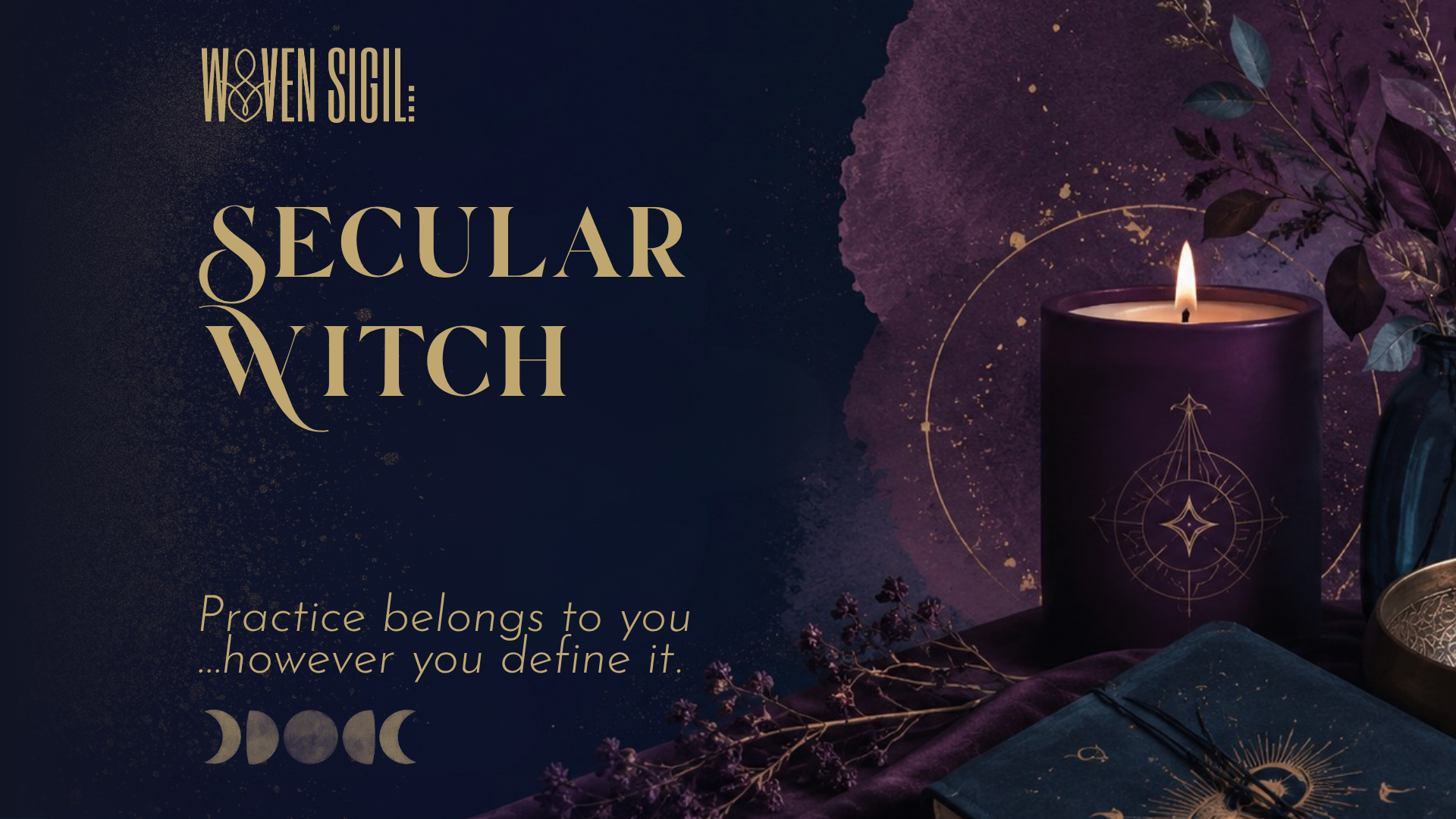
Can You Practice Witchcraft Without Believing in Magic?
Yes. There's no entry requirement.
Witchcraft is not a single unified system with a doctrine you have to sign onto. It's an umbrella term — a broad one — that covers everything from highly ceremonial magical traditions rooted in specific cosmological frameworks, to folk practice that's mostly about intention and habit, to secular ritual that has nothing to do with supernatural claims at all.
Plenty of people who don't believe in magic as a literal force practice it anyway.
What Secular Practice Actually Looks Like
Secular or agnostic practitioners tend to work with the same tools as anyone else — candles, herbs, moon timing, tarot, seasonal observances — but they're not working with them because they believe in literal metaphysical causation. They're working with them because ritual is useful. It creates structure for intention and makes it concrete. It marks transitions that would otherwise blur into background noise.
A candle lit while saying what you're working toward does something regardless of whether you think the flame actually carries that intention somewhere. The act of stating a goal clearly, deliberately, in a moment of intention, makes it more real — more likely to be acted on, more difficult to abandon. It’s not magic in the supernatural sense but it is how human attention works.
Moon-phase timing functions the same way. Whether you think the full moon is literally amplifying your energy or simply providing a reliable visual cue to pause and review what's been building in your life, the timing serves a purpose. Something worth doing every twenty-nine days stays on the calendar. New moon, check in. Full moon, check in. The meaning you assign to that rhythm is yours to define.
What You Actually Don't Need
You don't need to believe in spirits or deities. You don't need to subscribe to any particular worldview. You don't need to use the word "witch" at all — that's optional, and what it means to different people varies enormously anyway.
You also don't need to justify your practice to anyone who insists belief is required. The history of folk practice is largely a history of ordinary people doing ordinary things with intention — tying herbs to a doorframe, marking the solstice, saving seeds, honoring the dead. Most of it predates formal theology and doesn't require any.
The Label Question
If "secular witchcraft" or "agnostic practice" feels like the right framing for where you are, use it. But really, there really isn’t any need to add a label to it at all. The practice doesn't change depending on what you call it.
What tends to matter more than labels is what you actually do: whether you show up consistently, whether the tools you're working with feel genuinely useful, whether the ritual helps you pay attention to your own life in a way that makes things go a bit better.
If you're still getting oriented to the broader landscape — what witchcraft is, what Wicca is, and why those aren't the same thing — Wicca vs. Witchcraft: A Beginner's Guide to Your Path covers the distinctions in a way that's useful regardless of where you land on the belief spectrum.

Can You Practice Witchcraft Without Believing in Magic?
Yes. There's no entry requirement.
Witchcraft is not a single unified system with a doctrine you have to sign onto. It's an umbrella term — a broad one — that covers everything from highly ceremonial magical traditions rooted in specific cosmological frameworks, to folk practice that's mostly about intention and habit, to secular ritual that has nothing to do with supernatural claims at all.
Plenty of people who don't believe in magic as a literal force practice it anyway.
What Secular Practice Actually Looks Like
Secular or agnostic practitioners tend to work with the same tools as anyone else — candles, herbs, moon timing, tarot, seasonal observances — but they're not working with them because they believe in literal metaphysical causation. They're working with them because ritual is useful. It creates structure for intention and makes it concrete. It marks transitions that would otherwise blur into background noise.
A candle lit while saying what you're working toward does something regardless of whether you think the flame actually carries that intention somewhere. The act of stating a goal clearly, deliberately, in a moment of intention, makes it more real — more likely to be acted on, more difficult to abandon. It’s not magic in the supernatural sense but it is how human attention works.
Moon-phase timing functions the same way. Whether you think the full moon is literally amplifying your energy or simply providing a reliable visual cue to pause and review what's been building in your life, the timing serves a purpose. Something worth doing every twenty-nine days stays on the calendar. New moon, check in. Full moon, check in. The meaning you assign to that rhythm is yours to define.
What You Actually Don't Need
You don't need to believe in spirits or deities. You don't need to subscribe to any particular worldview. You don't need to use the word "witch" at all — that's optional, and what it means to different people varies enormously anyway.
You also don't need to justify your practice to anyone who insists belief is required. The history of folk practice is largely a history of ordinary people doing ordinary things with intention — tying herbs to a doorframe, marking the solstice, saving seeds, honoring the dead. Most of it predates formal theology and doesn't require any.
The Label Question
If "secular witchcraft" or "agnostic practice" feels like the right framing for where you are, use it. But really, there really isn’t any need to add a label to it at all. The practice doesn't change depending on what you call it.
What tends to matter more than labels is what you actually do: whether you show up consistently, whether the tools you're working with feel genuinely useful, whether the ritual helps you pay attention to your own life in a way that makes things go a bit better.
If you're still getting oriented to the broader landscape — what witchcraft is, what Wicca is, and why those aren't the same thing — Wicca vs. Witchcraft: A Beginner's Guide to Your Path covers the distinctions in a way that's useful regardless of where you land on the belief spectrum.
Follow Us!


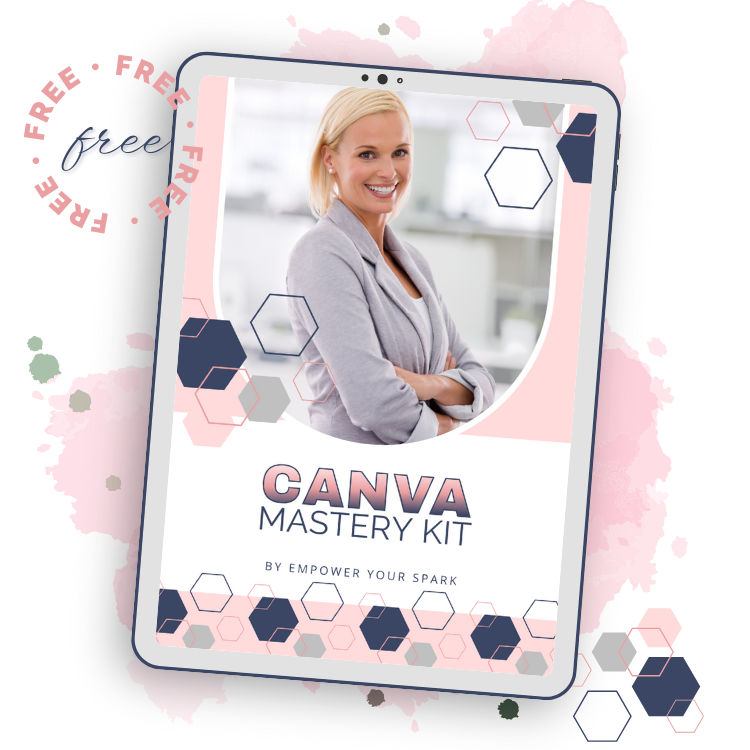
Get your FREE Canva Mastery Kit
A quick reference guide for Canva
FREE DOWNLOAD
Canva Mastery Kit
A Canva resource guide
Effortless Design Mastery: Discover time-saving shortcuts and techniques for polished Canva design
Professional Design Insights: Unlock tips for better Canva creations
Build Design Confidence: Gain skills for effortless creation
Stay up-to-date on socials:




Empower Your Spark © 2026. All Rights Reserved.