Simplified Strategies & Support For
female entrepreneurs
~ Create, Grow & Thrive with Confidence ~
Hey there! You might find some affiliate links in this blog. If you decide to make a purchase through one, I may earn a small commission. It helps keep this space running, and I only share things I personally find valuable. Thanks for being here!
Blog Posts
Tarot for Beginners: A Complete Guide to Getting Started with Divination
Tarot has moved well past the velvet-draped table at the back of the metaphysical shop. It's in mainstream bookstores, on bestseller lists, and sold in the beauty section at Urban Outfitters. This mainstreaming has introduced a lot of people to the cards for the first time — and created an equal amount of confusion about what tarot actually is, what it's for, and whether you need to be psychic to use it.
You don't. The short version: tarot is a deck of 78 illustrated cards originally designed for a card game, later adopted as a tool for reflection and introspection. You don't need a gift, a lineage, or a belief system to find it useful. You need a deck, some patience, and a willingness to sit with ambiguity.
This guide covers everything you need to start: the structure of the deck, how readings actually work, how to choose your first cards, and how to build a practice that's actually yours rather than borrowed wholesale from someone else's system.
A Brief History (That Helps Explain What Tarot Is For)
Tarot cards were invented in northern Italy in the early 15th century — not as a mystical tool but as a game called tarocchi, which is still played in parts of Europe today. The distinctive structure of the deck, including what we now call the Major Arcana, was designed for the game's mechanics.
They weren't widely used for divination until the late 18th century, when French occultists began developing elaborate symbolic systems and assigning esoteric meaning to the images. The Hermetic Order of the Golden Dawn in the late 19th and early 20th centuries layered in additional associations — Kabbalah, astrology, numerology — and the Rider-Waite-Smith deck, published in 1909, became the template most modern decks are built from.
This history matters for one practical reason: tarot images weren't designed as divine transmissions. They were designed by people, often with very specific symbolic agendas, in very specific cultural contexts. Which means that using tarot is ultimately about what you bring to the images, what they surface in you, and how they help you think. That's a much more honest and more useful frame than "the cards know something you don't."
The Structure of a Tarot Deck
A standard tarot deck has 78 cards, divided into two sections: the Major Arcana and the Minor Arcana.
The Major Arcana consists of 22 cards numbered 0–21. These are the named cards you've probably seen referenced in culture: The Fool, The High Priestess, The Tower, The Star, Death, The World, and so on. They tend to be associated with larger life themes, significant turning points, or archetypal patterns — the bigger forces and cycles at play rather than day-to-day events.
The Minor Arcana consists of 56 cards divided into four suits: Wands, Cups, Swords, and Pentacles (sometimes called Coins or Discs depending on the deck). Each suit has 14 cards: Ace through 10, plus four court cards (Page, Knight, Queen, King — though some decks rename these). The Minor Arcana deals with more immediate, practical aspects of life.
The four suits each carry general thematic associations:
Wands — fire, passion, creativity, drive, ambition, projects, will
Cups — water, emotion, relationships, intuition, the inner life, feeling
Swords — air, thought, conflict, communication, decisions, challenges, mental clarity
Pentacles — earth, the physical world, money, work, health, practical matters, the body
These associations aren't rules. They're a starting vocabulary that helps you begin to work with the cards before your own relationship to the images has fully developed.
What Tarot Is Actually For
Tarot is a projective tool. The images on the cards are rich, ambiguous, and layered — which means your mind has a lot of material to project onto them. What you see in a card, what resonates, what disturbs you, what you skip past without looking — all of that is information about your current internal state, your assumptions, and your blind spots.
This is why tarot works even if you believe the cards are completely random. The randomness doesn't matter; what matters is the encounter between the image and your current preoccupations. A question like "What do I need to know about this situation?" combined with a card that makes you immediately uncomfortable or oddly hopeful is often enough to surface something worth examining.
Tarot is useful for getting a different perspective on a situation you're too close to see clearly, articulating a feeling or conflict you couldn't put into words, generating questions to sit with rather than quick answers, building a reflective practice around significant decisions or transitions, and journaling prompts and inner-work support.
Tarot is not particularly useful as a literal fortune-telling device. If you're hoping a card will tell you whether to take the job, whether he's coming back, or what the stock market is doing next quarter, you're going to be disappointed — or more likely, you'll unconsciously interpret the cards to confirm what you already wanted to hear, which isn't really guidance.
Other Divination Tools Worth Knowing
Tarot isn't the only option, and it isn't necessarily the right one for everyone.
Oracle cards are a broader, looser category — any card-based system that doesn't follow the 78-card tarot structure. Oracle decks can have any number of cards and any thematic system the creator designed. They tend to be gentler and more accessible for beginners because the messages are usually more direct and less structured interpretation is required. The tradeoff is that they typically offer less nuance than a well-learned tarot deck over time.
Runes are an older system used by Germanic and Norse peoples, later adopted as a divination tool. Each rune carries an associated concept and can be drawn or cast to generate interpretive prompts. Runes are useful for people who prefer a more minimal system with fewer images.
Pendulums are a simple divination method using a weighted object on a string, often used for yes/no questions. Most useful as a quick check-in or for decisions where you already have all the information but haven't decided yet — the pendulum essentially asks your body what it already knows.
Bibliomancy — opening any book to a random page and reading the first line your eye lands on — is the most accessible form of divination and requires exactly zero equipment beyond a book you find meaningful.
There are many others as well: Astrology, scrying mirrors, Ouija boards, I Ching, Tea leaves etc. Too many to go into details for them all.
None of these are better or more legitimate than the others. They're tools. Choose based on what you're actually drawn to, not what someone else says is more advanced or authentic.
Choosing Your First Tarot Deck
There's a persistent myth that you have to receive your first tarot deck as a gift. You don't. Buy yourself one.
The more useful guidance is to choose a deck whose imagery genuinely interests you. If the art feels cold or dated or just wrong to you, you'll find it harder to stay engaged with it. The image is the starting point for every reading, so it needs to be something your mind actually wants to work with.
The Rider-Waite-Smith deck (1909, illustrated by Pamela Colman Smith) is the foundational deck most guidebooks reference. Its imagery is fully illustrated — even the numbered pip cards show scenes rather than just symbols — which makes it significantly more accessible for beginners than older decks like the Tarot de Marseille. If you want to be able to use any guidebook, learn from any online resource, or eventually branch out into other decks with confidence, starting with a Rider-Waite-Smith or a deck closely based on it is the most practical choice.
That said: if the RWS imagery feels stiff or culturally alienating to you, there are hundreds of decks built on the same structural framework with very different visual sensibilities. The Modern Witch Tarot by Lisa Sterle translates the imagery into a more diverse, contemporary setting. The Light Seer's Tarot is another accessible option. Whatever deck you choose, read reviews from people who have actually worked with it over time rather than just appreciated it visually.
A word on buying second-hand: if the idea of picking up someone else's energy from a used deck concerns you, a simple cleansing practice — leaving the deck in moonlight or shuffling it thoroughly while setting your own intention — is enough to make it yours. If it doesn't concern you, great. Buy the deck.
How to Read Tarot: The Basics
The most important skill is learning to read the image rather than relying entirely on memorized meanings.
Start with observation. When you pull a card, look at it before you open a guidebook. What's happening in the scene? What's the emotional tone? What character or symbol draws your eye? What bothers you or doesn't fit? What does the card feel like before you know what it's "supposed" to mean?
Then check the guidebook. Read the traditional interpretation, but notice how it does or doesn't match your instinctive read. Where they diverge is often where the most interesting work happens.
Consider the question. A card doesn't have a single fixed meaning — it has a range of meanings determined partly by the question you asked and the position the card occupies in a spread. The 5 of Swords in response to "What's the conflict in this relationship?" means something different than the same card in response to "What do I need to let go of?"
Don't read reversed cards until you're ready. Many experienced readers interpret reversed cards (those that appear upside-down in a reading) as modified or complicated versions of the upright meaning. This doubles the complexity of every card when you're learning. Start with upright-only readings until you feel comfortable, then introduce reversals if and when they feel useful.
Simple Spreads to Start With
One-card pull. The most useful place to start. Ask a question, pull a card, sit with it. "What do I need to know today?" "What's the energy around this decision?" "What am I missing?" One-card readings train you to work deeply with a single image rather than skimming across many.
Three-card spread. Flexible and powerful. The three positions can mean many things: Past / Present / Future; Situation / Challenge / Guidance; Mind / Body / Spirit; What I know / What I don't know / What I need to know. Choose the framing that fits your question, and be consistent within a single reading.
Celtic Cross. A ten-card spread that's considered the standard comprehensive reading. It's worth learning eventually, but most readers work with simpler layouts for years before finding it useful rather than overwhelming. Build your own spreads once you feel comfortable — designing a layout for a specific recurring question makes tarot much more personal.
Keeping a Tarot Journal
A tarot journal is one of the most effective tools for developing your relationship with the cards, and also a good inner-work practice in its own right.
What to record after each reading: the question you asked, the cards that appeared (noting positions and whether any were reversed), your immediate impressions before consulting any reference, what the guidebook says, and any additional thoughts or feelings that came up. A date is useful so you can look back later.
Looking back is the point. Patterns in which cards keep appearing for you, in which positions, around which questions, over weeks or months — that pattern is far more informative than any single reading. The cards that always show up when you're anxious about work, or the recurring Major Arcana that appears during significant decisions, tells you something about your own subconcious that no guidebook can.
The 8-Phase Moon Journaling Guide pairs well with tarot journaling — pulling a card at each moon phase as part of the monthly reflection creates a natural structure for tracking themes across a full cycle rather than reading in isolation.
Common Misconceptions Worth Clearing Up
"You have to be psychic to read tarot." No. Tarot doesn't require or demonstrate psychic ability. It requires attention, curiosity, and some familiarity with the imagery. The interpretation happens through you, not through a supernatural channel.
"Death means actual death." The Death card indicates an ending, a transformation, a significant transition from one phase to another. It rarely refers to literal death, and experienced readers don't particularly dread pulling it.
"Only certain people can read tarot." No lineage is required, no initiation, no specific spiritual path. Tarot belongs to whoever works with it.
"You shouldn't read for yourself." Reading for yourself is one of the most common and useful applications of tarot. The main challenge is that you can be too close to a situation to interpret clearly — worth noting, but not a reason to avoid self-readings entirely.
"The cards can tell you what to do." They can't, and they won't. Tarot is a reflective tool. What a reading can do is clarify what you already know but haven't let yourself acknowledge, or surface a perspective you'd been avoiding. The decision is always yours.
Building a Divination Practice
A regular practice is more useful than occasional deep-dive readings. Small, consistent engagement builds fluency over time.
A simple entry point: pull one card each morning with a simple question — "What's the energy I'm working with today?" — and note it in your journal. Review weekly to see what patterns emerge. After a month, you'll have a much more intuitive relationship with the cards than you would from doing one comprehensive reading a month.
Some people build their practice around the lunar cycle. Others use tarot seasonally, with a larger reading at each sabbat or equinox. Others read when facing a particular decision or transition and don't maintain a regular daily practice at all. All of these work.
What doesn't tend to work is pulling cards obsessively around the same question, hoping the reading will eventually say something different. If you've pulled three cards about the same situation and gotten three different answers you can't reconcile, step away from the deck for a while. The confusion is the message.
Learning the Cards: A More Useful Approach Than Memorization
Trying to memorize all 78 card meanings before doing your first reading is one of the most effective ways to never actually start. The meanings are ranges and tendencies you will internalize gradually through use — not formulas to be drilled.
A more practical approach: work through the deck in small groups over time. Spend a week with just the Major Arcana. Then move through the suits one at a time. Within each suit, the numbered cards follow a loose narrative arc from Ace (pure potential, the seed of what that suit governs) through Ten (culmination — sometimes resolution, sometimes overload or ending). Understanding this arc gives you a structural interpretive framework even before you know specific card meanings.
The court cards — Page, Knight, Queen, King — are consistently the most confusing part for beginners. They can represent actual people in your life, aspects of yourself you're expressing or need to develop, or the energy called for in a situation. A Queen of Cups might represent a real woman in your life who is emotionally intuitive, or the part of you that needs to lead with empathy right now, or simply that a situation calls for emotional intelligence rather than decisive action. Learning to sit with this ambiguity is one of the more useful skills tarot builds.
After a year of daily pulls and consistent journaling, you'll know the deck in a way that studying alone cannot replicate.
Finding Your Interpretive Voice
One risk with tarot, given how much content exists around it, is that you end up reading by permission — checking what the guidebook says, what a popular reader online says — rather than developing real interpretive confidence.
Your interpretive voice develops through disagreeing with sources. When the guidebook says the 9 of Swords is about anxiety and nightmares, and you keep pulling it during periods of productive creative struggle rather than distress, that's information worth examining. Exploring where your reading and the traditional meaning diverge builds genuine understanding rather than pattern-matching.
Read other interpretations, especially for cards you find opaque. But treat them as perspectives, not authorities. The cards are your territory.

Tarot for Beginners: A Complete Guide to Getting Started with Divination
Tarot has moved well past the velvet-draped table at the back of the metaphysical shop. It's in mainstream bookstores, on bestseller lists, and sold in the beauty section at Urban Outfitters. This mainstreaming has introduced a lot of people to the cards for the first time — and created an equal amount of confusion about what tarot actually is, what it's for, and whether you need to be psychic to use it.
You don't. The short version: tarot is a deck of 78 illustrated cards originally designed for a card game, later adopted as a tool for reflection and introspection. You don't need a gift, a lineage, or a belief system to find it useful. You need a deck, some patience, and a willingness to sit with ambiguity.
This guide covers everything you need to start: the structure of the deck, how readings actually work, how to choose your first cards, and how to build a practice that's actually yours rather than borrowed wholesale from someone else's system.
A Brief History (That Helps Explain What Tarot Is For)
Tarot cards were invented in northern Italy in the early 15th century — not as a mystical tool but as a game called tarocchi, which is still played in parts of Europe today. The distinctive structure of the deck, including what we now call the Major Arcana, was designed for the game's mechanics.
They weren't widely used for divination until the late 18th century, when French occultists began developing elaborate symbolic systems and assigning esoteric meaning to the images. The Hermetic Order of the Golden Dawn in the late 19th and early 20th centuries layered in additional associations — Kabbalah, astrology, numerology — and the Rider-Waite-Smith deck, published in 1909, became the template most modern decks are built from.
This history matters for one practical reason: tarot images weren't designed as divine transmissions. They were designed by people, often with very specific symbolic agendas, in very specific cultural contexts. Which means that using tarot is ultimately about what you bring to the images, what they surface in you, and how they help you think. That's a much more honest and more useful frame than "the cards know something you don't."
The Structure of a Tarot Deck
A standard tarot deck has 78 cards, divided into two sections: the Major Arcana and the Minor Arcana.
The Major Arcana consists of 22 cards numbered 0–21. These are the named cards you've probably seen referenced in culture: The Fool, The High Priestess, The Tower, The Star, Death, The World, and so on. They tend to be associated with larger life themes, significant turning points, or archetypal patterns — the bigger forces and cycles at play rather than day-to-day events.
The Minor Arcana consists of 56 cards divided into four suits: Wands, Cups, Swords, and Pentacles (sometimes called Coins or Discs depending on the deck). Each suit has 14 cards: Ace through 10, plus four court cards (Page, Knight, Queen, King — though some decks rename these). The Minor Arcana deals with more immediate, practical aspects of life.
The four suits each carry general thematic associations:
Wands — fire, passion, creativity, drive, ambition, projects, will
Cups — water, emotion, relationships, intuition, the inner life, feeling
Swords — air, thought, conflict, communication, decisions, challenges, mental clarity
Pentacles — earth, the physical world, money, work, health, practical matters, the body
These associations aren't rules. They're a starting vocabulary that helps you begin to work with the cards before your own relationship to the images has fully developed.
What Tarot Is Actually For
Tarot is a projective tool. The images on the cards are rich, ambiguous, and layered — which means your mind has a lot of material to project onto them. What you see in a card, what resonates, what disturbs you, what you skip past without looking — all of that is information about your current internal state, your assumptions, and your blind spots.
This is why tarot works even if you believe the cards are completely random. The randomness doesn't matter; what matters is the encounter between the image and your current preoccupations. A question like "What do I need to know about this situation?" combined with a card that makes you immediately uncomfortable or oddly hopeful is often enough to surface something worth examining.
Tarot is useful for getting a different perspective on a situation you're too close to see clearly, articulating a feeling or conflict you couldn't put into words, generating questions to sit with rather than quick answers, building a reflective practice around significant decisions or transitions, and journaling prompts and inner-work support.
Tarot is not particularly useful as a literal fortune-telling device. If you're hoping a card will tell you whether to take the job, whether he's coming back, or what the stock market is doing next quarter, you're going to be disappointed — or more likely, you'll unconsciously interpret the cards to confirm what you already wanted to hear, which isn't really guidance.
Other Divination Tools Worth Knowing
Tarot isn't the only option, and it isn't necessarily the right one for everyone.
Oracle cards are a broader, looser category — any card-based system that doesn't follow the 78-card tarot structure. Oracle decks can have any number of cards and any thematic system the creator designed. They tend to be gentler and more accessible for beginners because the messages are usually more direct and less structured interpretation is required. The tradeoff is that they typically offer less nuance than a well-learned tarot deck over time.
Runes are an older system used by Germanic and Norse peoples, later adopted as a divination tool. Each rune carries an associated concept and can be drawn or cast to generate interpretive prompts. Runes are useful for people who prefer a more minimal system with fewer images.
Pendulums are a simple divination method using a weighted object on a string, often used for yes/no questions. Most useful as a quick check-in or for decisions where you already have all the information but haven't decided yet — the pendulum essentially asks your body what it already knows.
Bibliomancy — opening any book to a random page and reading the first line your eye lands on — is the most accessible form of divination and requires exactly zero equipment beyond a book you find meaningful.
There are many others as well: Astrology, scrying mirrors, Ouija boards, I Ching, Tea leaves etc. Too many to go into details for them all.
None of these are better or more legitimate than the others. They're tools. Choose based on what you're actually drawn to, not what someone else says is more advanced or authentic.
Choosing Your First Tarot Deck
There's a persistent myth that you have to receive your first tarot deck as a gift. You don't. Buy yourself one.
The more useful guidance is to choose a deck whose imagery genuinely interests you. If the art feels cold or dated or just wrong to you, you'll find it harder to stay engaged with it. The image is the starting point for every reading, so it needs to be something your mind actually wants to work with.
The Rider-Waite-Smith deck (1909, illustrated by Pamela Colman Smith) is the foundational deck most guidebooks reference. Its imagery is fully illustrated — even the numbered pip cards show scenes rather than just symbols — which makes it significantly more accessible for beginners than older decks like the Tarot de Marseille. If you want to be able to use any guidebook, learn from any online resource, or eventually branch out into other decks with confidence, starting with a Rider-Waite-Smith or a deck closely based on it is the most practical choice.
That said: if the RWS imagery feels stiff or culturally alienating to you, there are hundreds of decks built on the same structural framework with very different visual sensibilities. The Modern Witch Tarot by Lisa Sterle translates the imagery into a more diverse, contemporary setting. The Light Seer's Tarot is another accessible option. Whatever deck you choose, read reviews from people who have actually worked with it over time rather than just appreciated it visually.
A word on buying second-hand: if the idea of picking up someone else's energy from a used deck concerns you, a simple cleansing practice — leaving the deck in moonlight or shuffling it thoroughly while setting your own intention — is enough to make it yours. If it doesn't concern you, great. Buy the deck.
How to Read Tarot: The Basics
The most important skill is learning to read the image rather than relying entirely on memorized meanings.
Start with observation. When you pull a card, look at it before you open a guidebook. What's happening in the scene? What's the emotional tone? What character or symbol draws your eye? What bothers you or doesn't fit? What does the card feel like before you know what it's "supposed" to mean?
Then check the guidebook. Read the traditional interpretation, but notice how it does or doesn't match your instinctive read. Where they diverge is often where the most interesting work happens.
Consider the question. A card doesn't have a single fixed meaning — it has a range of meanings determined partly by the question you asked and the position the card occupies in a spread. The 5 of Swords in response to "What's the conflict in this relationship?" means something different than the same card in response to "What do I need to let go of?"
Don't read reversed cards until you're ready. Many experienced readers interpret reversed cards (those that appear upside-down in a reading) as modified or complicated versions of the upright meaning. This doubles the complexity of every card when you're learning. Start with upright-only readings until you feel comfortable, then introduce reversals if and when they feel useful.
Simple Spreads to Start With
One-card pull. The most useful place to start. Ask a question, pull a card, sit with it. "What do I need to know today?" "What's the energy around this decision?" "What am I missing?" One-card readings train you to work deeply with a single image rather than skimming across many.
Three-card spread. Flexible and powerful. The three positions can mean many things: Past / Present / Future; Situation / Challenge / Guidance; Mind / Body / Spirit; What I know / What I don't know / What I need to know. Choose the framing that fits your question, and be consistent within a single reading.
Celtic Cross. A ten-card spread that's considered the standard comprehensive reading. It's worth learning eventually, but most readers work with simpler layouts for years before finding it useful rather than overwhelming. Build your own spreads once you feel comfortable — designing a layout for a specific recurring question makes tarot much more personal.
Keeping a Tarot Journal
A tarot journal is one of the most effective tools for developing your relationship with the cards, and also a good inner-work practice in its own right.
What to record after each reading: the question you asked, the cards that appeared (noting positions and whether any were reversed), your immediate impressions before consulting any reference, what the guidebook says, and any additional thoughts or feelings that came up. A date is useful so you can look back later.
Looking back is the point. Patterns in which cards keep appearing for you, in which positions, around which questions, over weeks or months — that pattern is far more informative than any single reading. The cards that always show up when you're anxious about work, or the recurring Major Arcana that appears during significant decisions, tells you something about your own subconcious that no guidebook can.
The 8-Phase Moon Journaling Guide pairs well with tarot journaling — pulling a card at each moon phase as part of the monthly reflection creates a natural structure for tracking themes across a full cycle rather than reading in isolation.
Common Misconceptions Worth Clearing Up
"You have to be psychic to read tarot." No. Tarot doesn't require or demonstrate psychic ability. It requires attention, curiosity, and some familiarity with the imagery. The interpretation happens through you, not through a supernatural channel.
"Death means actual death." The Death card indicates an ending, a transformation, a significant transition from one phase to another. It rarely refers to literal death, and experienced readers don't particularly dread pulling it.
"Only certain people can read tarot." No lineage is required, no initiation, no specific spiritual path. Tarot belongs to whoever works with it.
"You shouldn't read for yourself." Reading for yourself is one of the most common and useful applications of tarot. The main challenge is that you can be too close to a situation to interpret clearly — worth noting, but not a reason to avoid self-readings entirely.
"The cards can tell you what to do." They can't, and they won't. Tarot is a reflective tool. What a reading can do is clarify what you already know but haven't let yourself acknowledge, or surface a perspective you'd been avoiding. The decision is always yours.
Building a Divination Practice
A regular practice is more useful than occasional deep-dive readings. Small, consistent engagement builds fluency over time.
A simple entry point: pull one card each morning with a simple question — "What's the energy I'm working with today?" — and note it in your journal. Review weekly to see what patterns emerge. After a month, you'll have a much more intuitive relationship with the cards than you would from doing one comprehensive reading a month.
Some people build their practice around the lunar cycle. Others use tarot seasonally, with a larger reading at each sabbat or equinox. Others read when facing a particular decision or transition and don't maintain a regular daily practice at all. All of these work.
What doesn't tend to work is pulling cards obsessively around the same question, hoping the reading will eventually say something different. If you've pulled three cards about the same situation and gotten three different answers you can't reconcile, step away from the deck for a while. The confusion is the message.
Learning the Cards: A More Useful Approach Than Memorization
Trying to memorize all 78 card meanings before doing your first reading is one of the most effective ways to never actually start. The meanings are ranges and tendencies you will internalize gradually through use — not formulas to be drilled.
A more practical approach: work through the deck in small groups over time. Spend a week with just the Major Arcana. Then move through the suits one at a time. Within each suit, the numbered cards follow a loose narrative arc from Ace (pure potential, the seed of what that suit governs) through Ten (culmination — sometimes resolution, sometimes overload or ending). Understanding this arc gives you a structural interpretive framework even before you know specific card meanings.
The court cards — Page, Knight, Queen, King — are consistently the most confusing part for beginners. They can represent actual people in your life, aspects of yourself you're expressing or need to develop, or the energy called for in a situation. A Queen of Cups might represent a real woman in your life who is emotionally intuitive, or the part of you that needs to lead with empathy right now, or simply that a situation calls for emotional intelligence rather than decisive action. Learning to sit with this ambiguity is one of the more useful skills tarot builds.
After a year of daily pulls and consistent journaling, you'll know the deck in a way that studying alone cannot replicate.
Finding Your Interpretive Voice
One risk with tarot, given how much content exists around it, is that you end up reading by permission — checking what the guidebook says, what a popular reader online says — rather than developing real interpretive confidence.
Your interpretive voice develops through disagreeing with sources. When the guidebook says the 9 of Swords is about anxiety and nightmares, and you keep pulling it during periods of productive creative struggle rather than distress, that's information worth examining. Exploring where your reading and the traditional meaning diverge builds genuine understanding rather than pattern-matching.
Read other interpretations, especially for cards you find opaque. But treat them as perspectives, not authorities. The cards are your territory.
Follow Us!


Get your FREE Canva Mastery Kit
A quick reference guide for Canva
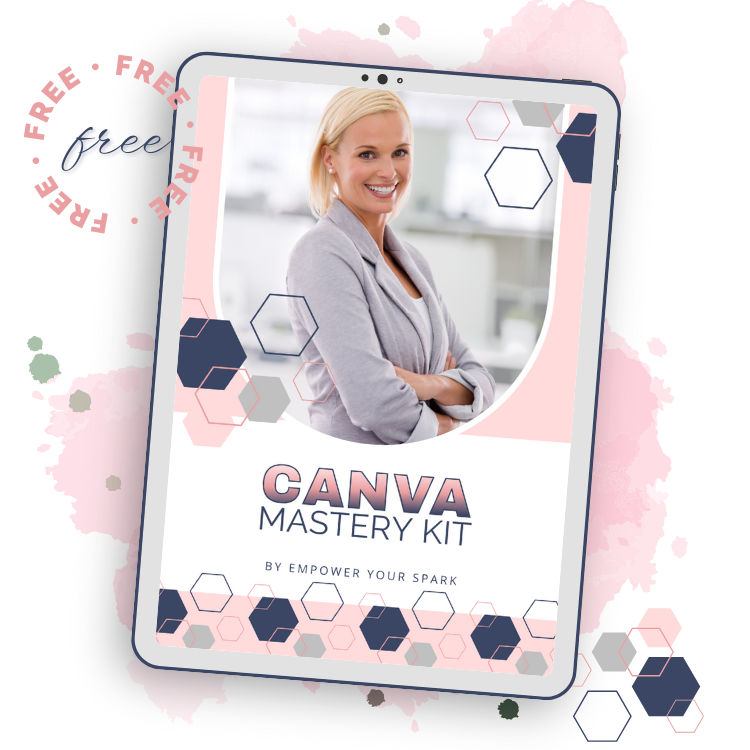
FREE DOWNLOAD
Canva Mastery Kit
A Canva resource guide
Effortless Design Mastery: Discover time-saving shortcuts and techniques for polished Canva design
Professional Design Insights: Unlock tips for better Canva creations
Build Design Confidence: Gain skills for effortless creation
Stay up-to-date on socials:

Empower Your Spark © 2026. All Rights Reserved.